Skip to content
Civil Technologist

Civil Technologist

  • Home
  • Calculators
    • Concrete Calculator
    • Steel Bar Weight Calculator
    • Plaster Calculator
    • Bitumen Extraction Test Calculator
  • Tests & Labs
    • Concrete Lab
    • Geotechnical Lab
    • Soil Mechanics lab
    • Concrete Test
  • Civil Engineering Standards: Complete Guide
    • AASHTO
    • ACI
    • ASTM
    • NHA
    • British Standard
    • European standard (EN)
    • Indian Standard
  • Articles
    • Road
    • Building
    • Estimate
  • About Us

Soil Mechanics lab

The Soil Mechanics Laboratory is a crucial component in the realm of civil engineering and construction, playing a pivotal role in understanding the physical and mechanical properties of soil. This laboratory serves as the testing ground where engineers and researchers conduct a myriad of experiments to analyze the behavior of soil under various conditions.

One of the primary objectives of a Soil Mechanics Laboratory is to determine the soil’s strength, permeability, compaction characteristics, and compressibility. Through a series of meticulously designed tests, engineers gain insights into the soil’s load-bearing capacity, enabling them to make informed decisions in the design and construction of structures.

In the laboratory, soil samples are subjected to a battery of tests, including the Triaxial Compression Test, Consolidation Test, and Direct Shear Test. These tests provide essential data on parameters like shear strength, consolidation characteristics, and the stress-strain behavior of soil. The findings are instrumental in designing foundations for structures, retaining walls, and slope stability analysis.

Transitioning from theoretical knowledge to practical application, the Soil Mechanics Laboratory equips civil engineering students and professionals with hands-on experience. Active participation in experiments fosters a deeper understanding of soil behavior and its implications on real-world construction projects.

Moreover, the laboratory employs state-of-the-art equipment to ensure accurate and reliable results. This commitment to precision reinforces the laboratory’s significance in shaping the future of civil engineering and construction practices.

In conclusion, the Soil Mechanics Laboratory stands as a cornerstone in the education and research landscape of civil engineering. Its role in unraveling the mysteries of soil behavior is indispensable, providing valuable insights that contribute to the safety and sustainability of infrastructure projects worldwide. Through active engagement in the laboratory, students and professionals alike embark on a journey that bridges theoretical knowledge with practical application, preparing them for the challenges of the ever-evolving field of civil engineering and construction.

Soil Tests Used in Civil and Geotechnical Engineering – Complete List
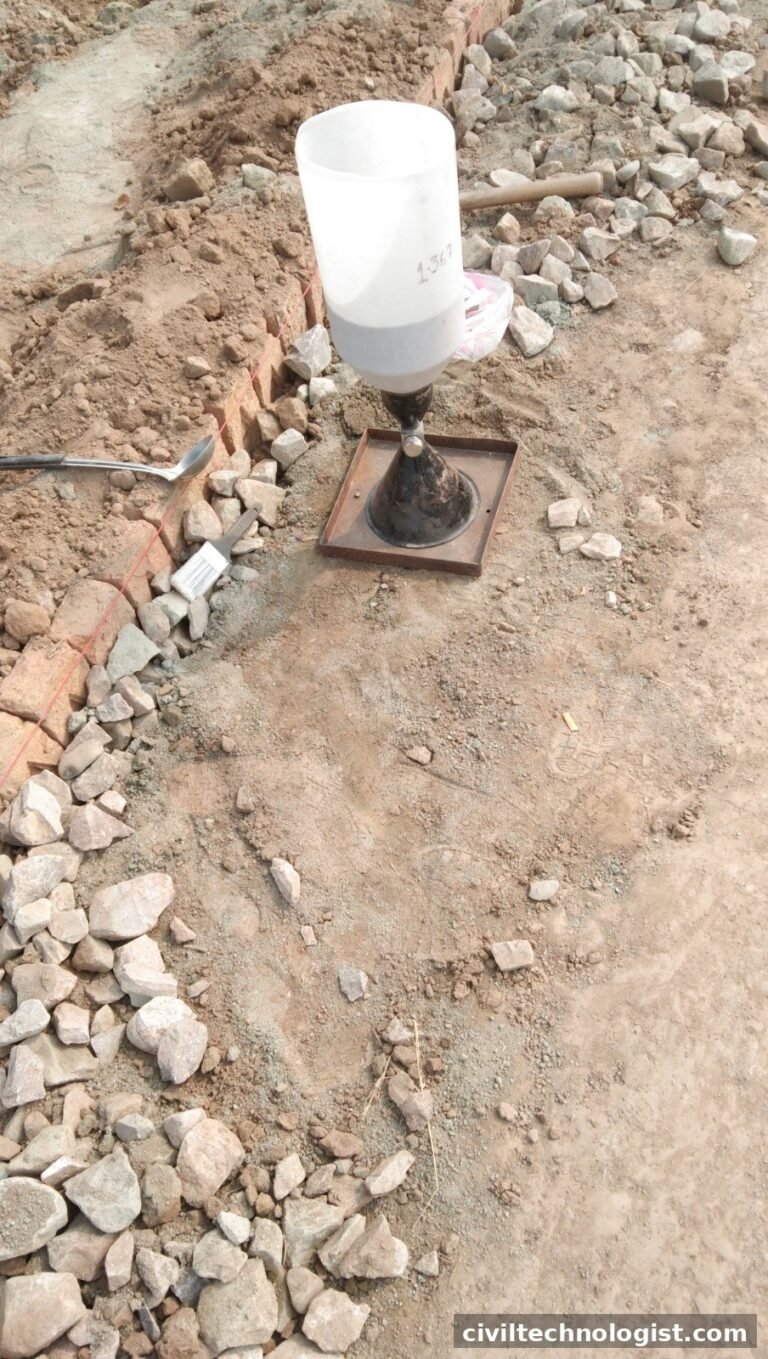
Soil Tests Used in Civil and Geotechnical Engineering – Complete List

Soil Tests Used in Civil and Geotechnical Engineering – Complete List Before a single footing is sized or a single …
Read more

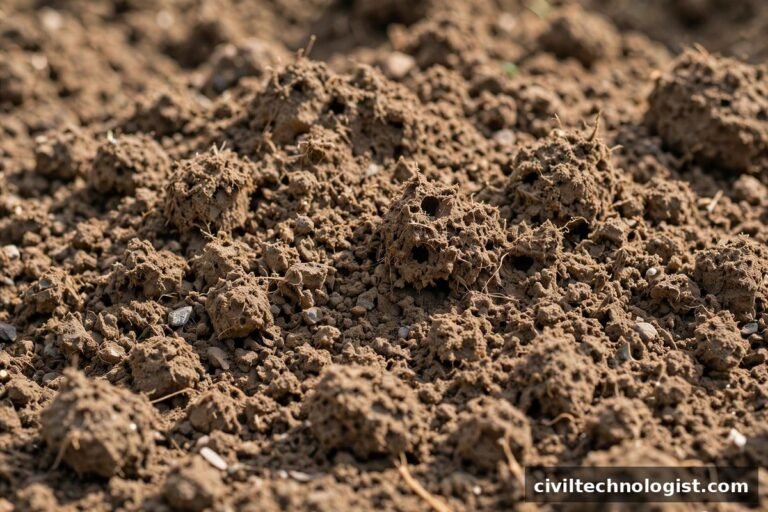
Fluff Factor (Swell Factor) of Soil: Formula & Worked Example

Loose excavated soil showing fluff or swell after digging

Fluff Factor (Swell Factor) of Soil: Formula & Worked Example Dig out 500 m³ of soil, and it will not …
Read more

Maximum Dry Density & Optimum Moisture Content: Proctor Test Explained

Every specification for earthwork says something like “compact to 95% of maximum dry density”. But where does that maximum come …

Read more

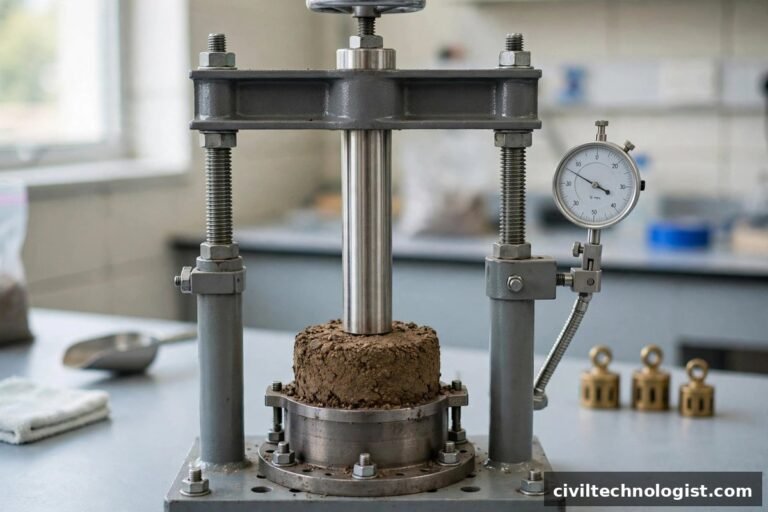
Field Density Test (Sand Cone Method): Procedure, Calculation & Report Format

Soil Tests Used in Civil and Geotechnical Engineering – Complete List

Field Density Test (Sand Cone Method): Procedure, Calculation & Report Format Rolling a subgrade or embankment layer means nothing until …
Read more

California Bearing Ratio (CBR) Test for Soil: Procedure and Calculation

California Bearing Ratio test apparatus with penetration plunger on compacted soil specimen and dial gauge in a geotechnical laboratory

Before a single layer of a road is laid, the designer asks one question about the ground beneath it: how …
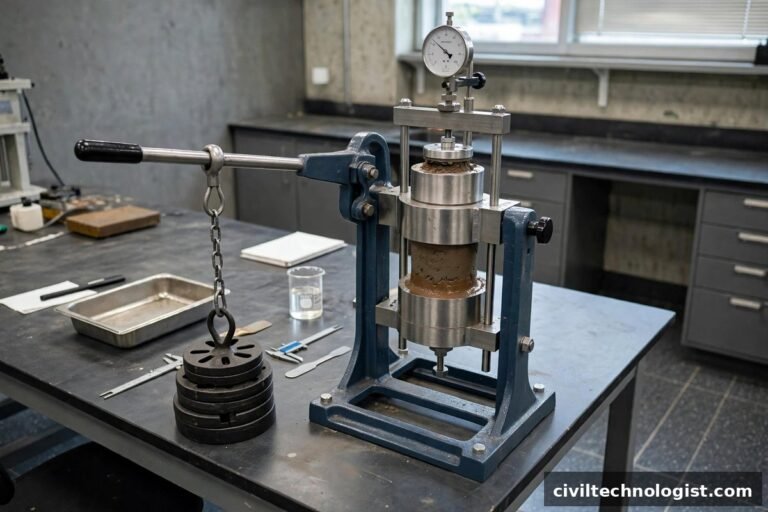
Read more

Consolidation Test (Oedometer): Procedure, e–log p Curve & Settlement Calculation

Buildings on clay do not settle the day the last floor is cast. They settle slowly — over months and …

Read more

Older posts
Page1 Page2 Next →

Popular Article

  • Civil Technologist vs Civil Engineer – What’s the Difference?
  • Penetration Test of Bitumen: Apparatus, Procedure, Grades & Standards
  • What Is Waterproofing? Purpose, Types, and Application Guide
  • Piles vs Piers vs Caissons: Key Differences in Deep Foundations
  • L-Box Test for Self-Compacting Concrete: Procedure, Blocking Ratio & Limits

Construction Calculators

Free estimation tools with step-by-step working:

  • 🧱 Brick Calculator
  • 🏗️ Cement Calculator
  • 🔩 Steel Bar Weight Calculator
  • 🧱 Plaster Calculator
  • 🟧 Tile Calculator
  • 🎨 Paint Calculator
  • 💧 Water Tank Calculator
  • 🏠 Land Area Converter
  • 🏗️ Concrete Calculator
  • 🛣️ Bitumen Extraction Calculator

View All Calculators →

Categories

Follow Us

Join our community:

▶ YouTube - Watch Tutorials f Facebook - Join Community in LinkedIn - Connect

  • Home
  • Privacy Policy
  • About Us
  • Contact
  • Disclaimer
  • Terms & Conditions
  • Sitemap
© 2022-2026 Civil Technologist