Concrete Testing: Complete List of Fresh & Hardened Concrete Tests

Concrete is tested twice in its life: once while it is fresh — when you can still fix problems — …
Concrete laboratories play a pivotal role in advancing the field of civil engineering and construction. These specialized facilities serve as testing grounds for the development and analysis of concrete mixtures, ensuring the durability and structural integrity of construction projects. In these labs, engineers and researchers actively investigate the properties of concrete, employing a range of methodologies to enhance its strength, flexibility, and resilience.
One of the primary functions of a concrete lab is to conduct compressive strength tests on concrete samples. Engineers use state-of-the-art equipment to measure the ability of concrete to withstand axial loads, providing crucial insights into its load-bearing capacity. Additionally, flexural strength tests assess the material’s ability to resist bending forces, crucial for applications such as beams and slabs in construction projects.
The concrete lab is also instrumental in evaluating the workability of concrete mixtures. Workability tests, such as the slump test, gauge the ease with which concrete can be mixed, transported, and placed. These tests are essential for optimizing the composition of concrete, ensuring it meets the specific requirements of each construction project.
Transitioning from testing to implementation, concrete labs actively contribute to the development of innovative construction materials. Through the use of advanced additives and admixtures, engineers aim to enhance the performance of concrete, addressing environmental concerns and improving overall sustainability in the construction industry.
In conclusion, concrete labs serve as dynamic hubs of innovation in civil engineering and construction. Through rigorous testing and research, these facilities contribute to the evolution of concrete technology, ensuring the development of materials that meet the ever-growing demands of modern construction projects.
Concrete is tested twice in its life: once while it is fresh — when you can still fix problems — …
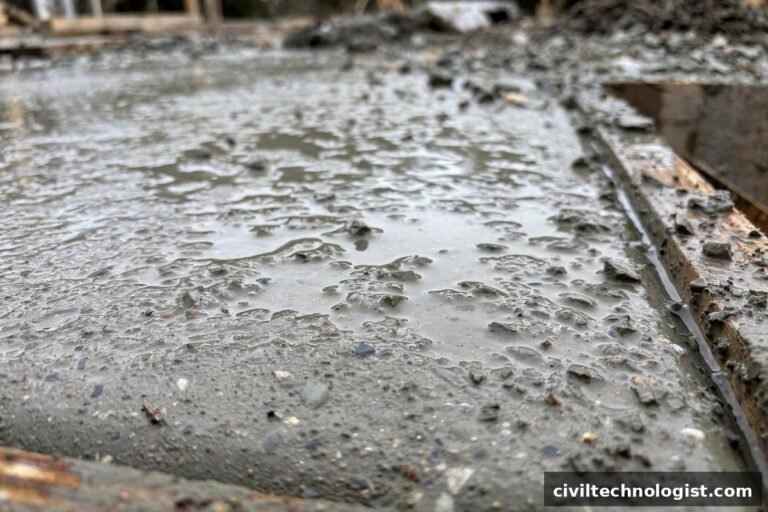
Pour a slab on a hot afternoon, come back an hour later, and the surface is covered with a thin …
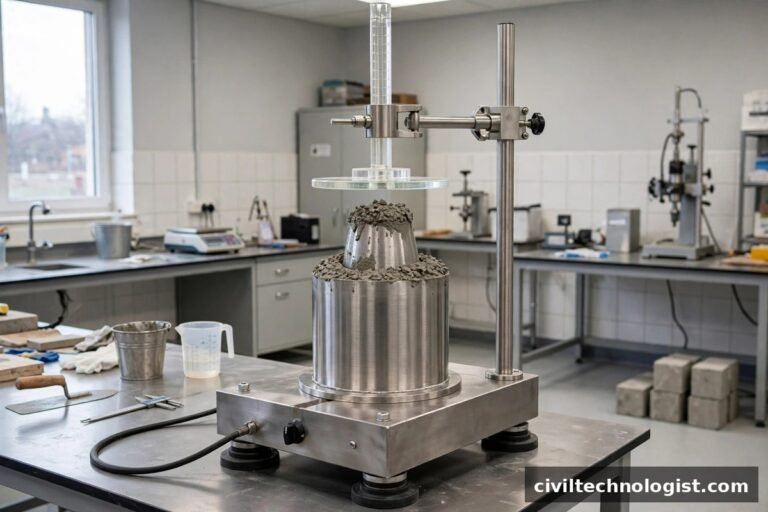
The slump cone is the most famous workability test in concrete — but it has a blind spot. A very …
Every concrete mix design assumes a certain weight per cubic metre — usually around 2400 kg/m³ for normal-weight concrete. The …
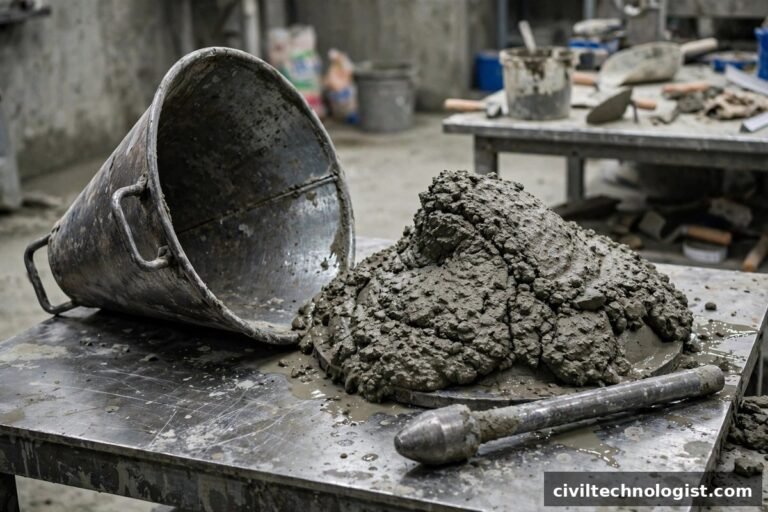
Slump Test on Fresh Concrete: Procedure, Slump Types and Interpretation The slump test is the most performed concrete test on …

A bag of cement carries a lot of promises — strength, durability, predictable setting. These twelve tests are how those …