Consolidation Test (Oedometer): Procedure, e–log p Curve & Settlement Calculation
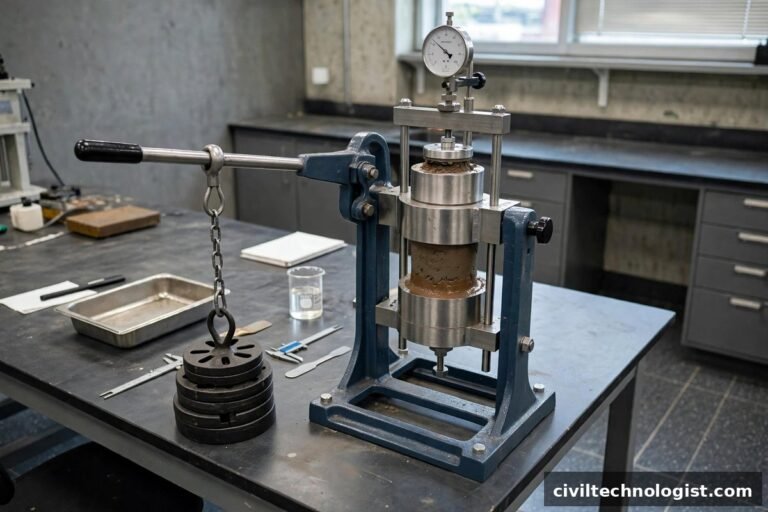
Buildings on clay do not settle the day the last floor is cast. They settle slowly — over months and …
Geotechnical lab play a pivotal role in the realm of civil engineering and construction, serving as the testing ground for assessing soil and rock properties that directly influence the stability and safety of structures. These facilities utilize advanced equipment and methodologies to conduct a comprehensive range of tests, providing crucial data for informed decision-making during the design and construction phases.
In these laboratories, skilled geotechnical engineers conduct tests such as soil classification, compaction, and permeability assessments. These tests help determine the soil’s ability to bear loads, its compressibility, and its response to various environmental conditions. Active voice is employed in conducting experiments, ensuring accurate and reliable results.
Furthermore, geotechnical labs employ cutting-edge technologies, such as automated data acquisition systems, to streamline the testing process. This not only enhances efficiency but also facilitates real-time monitoring, enabling engineers to make timely adjustments to construction plans.
Transitioning from the laboratory to the construction site, the data generated in geotechnical lab becomes instrumental in foundation design, slope stability analysis, and overall risk assessment. Engineers can confidently tailor construction strategies based on precise information obtained from these labs, ensuring the longevity and safety of structures.
In essence, geotechnical labs serve as the backbone of civil engineering projects, offering a scientific approach to understanding the unique properties of soil and rock formations. By utilizing the active voice in conducting tests and incorporating seamless transitions in data interpretation, these laboratories contribute significantly to the success and sustainability of construction endeavors.
In essence, geotechnical labs are indispensable for ensuring the resilience of structures, enabling precise construction planning and risk mitigation strategies.
Buildings on clay do not settle the day the last floor is cast. They settle slowly — over months and …
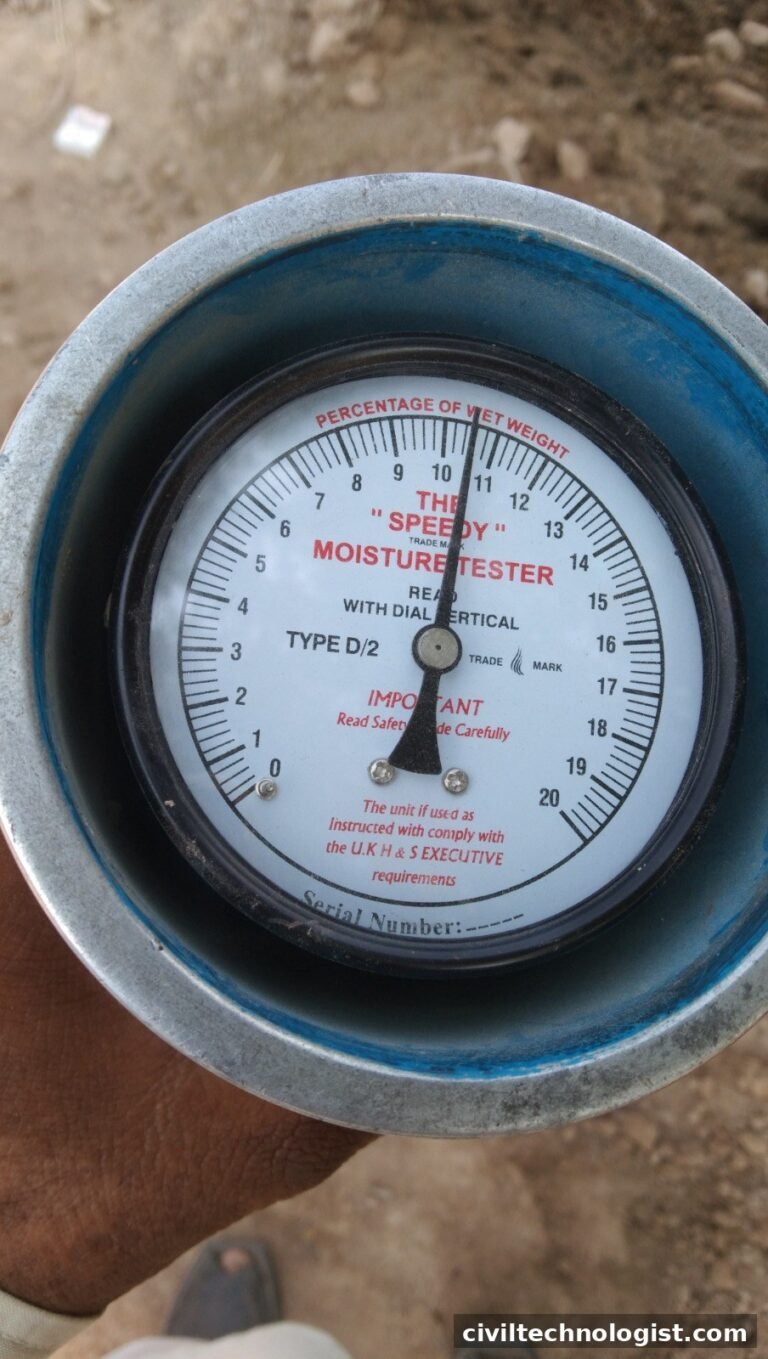
Compaction control lives or dies on moisture content. The oven-dry method is the reference standard, but it takes 16–24 hours …

How fast water moves through soil decides whether a foundation stays dry, a retaining wall survives, or an embankment dam …